
Basketball Player Season Return Outline After Summer Break

The first days back on the court can feel awkward. Your shot might be short. Your legs may feel heavy. Your timing on cuts, stops, and defensive slides may be off. That is normal after summer break, even for players who stayed active.
This outline gives a clear return plan for a basketball player getting ready for the regular season. It is built as a practical ramp-up, not a punishment plan. The goal is to rebuild conditioning, sharpen basketball skills, regain rhythm, and arrive at tryouts or team practice with confidence.
Use this as a flexible guide. Adjust the workload based on age, training history, injury history, access to a gym, and coaching schedule. If pain shows up or an old injury returns, stop and get help from a qualified coach, athletic trainer, or medical professional.

Title options
Basketball Player Season Return Outline After Summer Break
Four-Week Basketball Return Plan for Preseason Readiness
How a Basketball Player Can Get Court-Ready After Summer Break
Audience and goal
Audience
Basketball players, coaches, parents, and trainers who need a simple preseason return outline after summer break.
Goal
Help a player rebuild body control, conditioning, skill rhythm, and game readiness before the regular season begins.
Core return strategy
Suggested length if drafted: 150 to 200 words.
The return should move from easy to intense. A player should not jump straight from summer break into full-speed scrimmages every day. That usually leads to sore legs, poor shooting habits, and higher risk of small injuries.
The best return plan has four layers:
Movement quality Build clean footwork, landing mechanics, balance, and change of direction.
Basketball touch Bring back shooting feel, passing accuracy, dribbling control, and finishing rhythm.
Conditioning Prepare the body for repeated sprints, defensive possessions, and late-game effort.
Game speed Add contact, decision-making, pressure, and competitive play at the right time.
The player should increase workload across several weeks. Each week should include court work, strength work, mobility, recovery, and at least one lighter day.
Week one should rebuild the base
Suggested length if drafted: 250 to 300 words.
The first week is about getting the body used to basketball again. Keep the intensity moderate. The player should leave sessions feeling like they could have done a little more.
Main goals
Regain feel for the ball
Wake up basketball footwork
Improve mobility in ankles, hips, and shoulders
Start conditioning without overloading the legs
Check for pain, tightness, or major imbalances
Court focus
Use simple drills. Do not rush into long scrimmages.
Good week one court work includes:
Stationary ball handling
Form shooting close to the rim
Layups from both sides
Basic footwork into shots
Light defensive slides
Controlled change-of-direction drills
Free throws at the end of workouts
Conditioning focus
Conditioning should match basketball, but at a lower speed.
Use short intervals such as:
Half-court jogs into controlled backpedals
Lane slides at 50 to 70 percent speed
Short sprint build-ups
Jump rope rounds
Light tempo runs
Avoid max-effort conditioning tests in week one unless a coach requires them.
Sample week one schedule
Day | Focus | Intensity |
Monday | Ball handling, form shooting, mobility | Low to moderate |
Tuesday | Strength basics, light conditioning | Moderate |
Wednesday | Shooting reps, footwork, finishing | Moderate |
Thursday | Recovery, stretching, easy walk | Low |
Friday | Shooting, defensive slides, short sprints | Moderate |
Saturday | Light pickup or skill workout | Moderate |
Sunday | Rest | Low |

Week two should restore basketball rhythm
Suggested length if drafted: 250 to 300 words.
By week two, the player can increase volume and pace. The body should feel less stiff, and shooting touch should start to return.
This week should connect skills together. Instead of only stationary drills, add movement, reads, and short bursts of speed.
Main goals
Shoot off movement
Add controlled contact finishing
Improve handle under light pressure
Build repeat sprint ability
Start small-sided competition
Court focus
Week two should include more game-like actions.
Useful drills include:
Catch-and-shoot from game spots
One-dribble pull-ups
Curl cuts into shots
Wing drives into floaters or finishes
Pick-and-roll reads without full contact
Closeout into defensive slide
One-on-one from limited spaces
Two-on-two or three-on-three advantage drills
The player should still protect shooting form. If legs get tired and the shot breaks down, reduce the volume or move closer to the basket.
Conditioning focus
Raise the pace, but keep rest periods smart.
Examples:
Sprint to half court, backpedal back
Defensive slide across the lane, sprint out
Twenty-second hard effort, forty-second rest
Full-court dribble push at 70 to 80 percent
Repeated closeout and recovery drills
This is also the week to begin tracking readiness. The player can note energy level, soreness, sleep quality, and shooting feel after each session.
Week three should raise intensity
Suggested length if drafted: 250 to 300 words.
Week three is where the plan starts to feel like real preseason basketball. The player should now train closer to game speed.
The main shift is pressure. Shooting, dribbling, passing, and defense should happen with a defender nearby or with a decision attached.
Main goals
Play through fatigue
Defend at higher intensity
Make faster reads
Handle contact better
Improve transition conditioning
Prepare for scrimmage pace
Court focus
Good week three work includes:
Full-speed closeouts
Transition finishing
Three-on-two and two-on-one breaks
One-on-one from the wing, slot, and corner
Shell defense
Rebounding and outlet drills
Scrimmage segments with short time limits
End-of-game free throws
The player should also practice role-specific skills.
A guard may focus on:
Pressure ball handling
Pick-and-roll decisions
Pull-up shooting
Entry passes
On-ball defense
A wing may focus on:
Catch-and-shoot reps
Straight-line drives
Defensive closeouts
Cutting
Rebounding from the perimeter
A post player may focus on:
Sealing position
Finishing through contact
Short-roll passing
Rim protection footwork
Defensive rebounding

Week four should prepare for regular season demands
Suggested length if drafted: 250 to 300 words.
Week four should look the most like the regular season. The player should now be ready for practices, tryouts, team workouts, and controlled scrimmages.
This does not mean every session should be exhausting. The goal is to sharpen. The player should feel fast, confident, and fresh enough to compete.
Main goals
Match team practice intensity
Clean up weak spots
Build confidence in role
Improve communication
Prepare mentally for competition
Maintain recovery habits
Court focus
Week four should include:
Competitive shooting drills
Live transition drills
Half-court offensive reads
Defensive rotations
Communication drills
Scrimmage situations
Special situations such as sideline out-of-bounds plays
Pressure free throws
A smart week four plan includes at least one lighter skill day. Too much hard scrimmaging can leave the player flat before the season starts.
Mental focus
This is the week to build habits that carry into the season.
The player should know:
Their best scoring spots
Their defensive responsibilities
Their strongest role on the team
Their conditioning level
Their recovery needs
Their personal goals for the first month of the season
Daily workout outline
Suggested length if drafted: 200 to 250 words.
A strong return workout does not need to be complicated. It should have a clear order.
Warm up for 10 to 15 minutes
Include:
Light jog
Dynamic stretches
High knees
Skips
Lunges
Hip mobility
Ankle mobility
Defensive stance holds
Skill work for 25 to 40 minutes
Include:
Ball handling
Form shooting
Footwork
Finishing
Passing
Free throws
Conditioning for 10 to 20 minutes
Use basketball-style intervals. Keep the work short and sharp.
Examples:
Sprint, rest, repeat
Slide, sprint, recover
Full-court dribble push
Closeout to boxout
Transition layup runs
Strength and body care for 20 to 35 minutes
Focus on movement quality.
Good choices include:
Squats or split squats
Hip hinges
Push-ups
Rows
Core holds
Calf raises
Landing mechanics
Shoulder stability
Cool down for 5 to 10 minutes
Finish with:
Easy walking
Light stretching
Breathing
Hydration
Training notes
Key checkpoints before the regular season
Suggested length if drafted: 200 to 250 words.
Before the regular season starts, the player should be able to answer a few simple questions.
Physical readiness
Can they sprint, stop, cut, and jump without pain?
Can they play several hard possessions in a row?
Do they recover well between workouts?
Are they sleeping enough?
Are they staying hydrated?
Skill readiness
Does their shot hold up when tired?
Can they finish with both hands?
Can they make simple reads under pressure?
Are their passes sharp and on time?
Can they defend without reaching every play?
Team readiness
Do they communicate on defense?
Do they run the floor both ways?
Do they know their role?
Do they compete without forcing plays?
Do they respond well to coaching?
This checkpoint section is the heart of the Basketball Player Season Return Outline After Summer Break because it turns training into clear signs of readiness.
Recovery and injury prevention outline
Suggested length if drafted: 150 to 200 words.
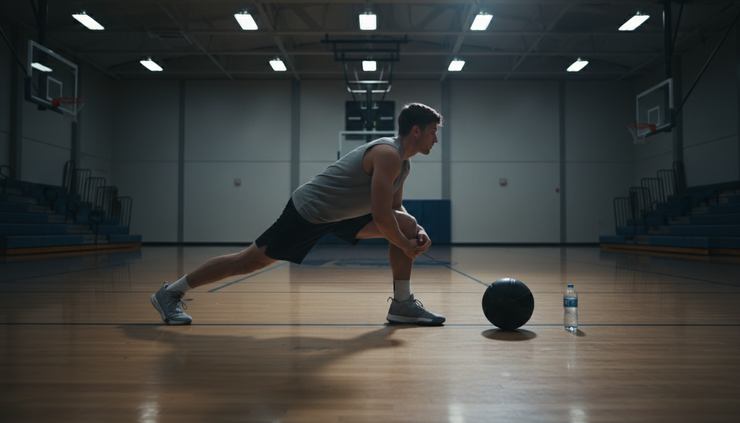
Recovery should be part of the plan from day one. A player who trains hard but ignores recovery may feel ready for a few days, then break down when practices stack up.
Recovery priorities
Sleep consistently
Eat enough balanced meals
Drink water throughout the day
Warm up before every court session
Cool down after hard workouts
Take soreness seriously
Avoid adding too much too soon
Warning signs
The player should slow down if they notice:
Sharp pain
Swelling
Limping
Pain that gets worse during play
Ongoing knee, ankle, hip, or back discomfort
Unusual fatigue that does not improve with rest
Small issues are easier to handle early. Playing through pain during preseason can turn a short setback into a longer one.
Final takeaway
A strong return after summer break should build week by week. Start with movement, touch, and control. Then add speed, pressure, contact, and competition.
The regular season rewards players who arrive prepared, not just tired. The best plan helps the player feel sharp, healthy, and confident when the games begin.


Comments